RAZAFINDRATSIMA LAB
  • Home
  • Research
    • Research Overview
    • Frugivory, Movement and Seed Dispersal
    • Ecological changes
    • Conservation & Management
  • Publications
    • Opinion pieces & Editorial articles
    • Scientific Articles
    • Published data
  • People
    • PI Razafindratsima
    • Postdocs & Students >
      • @ Cal
      • Affiliates
    • Past lab members & visitors
    • Field teams
  • Field updates
  • Outreach
  • Join Us
    • Call for applications MS
  • Useful Links
    • Fellowship resources
    • Research in Madagascar
  • Group news
  • Adventures
  • Affiliates

Field notes #11

11/30/2023

 
Text by Fetratiana Rakotomanga
Before telling about our adventurous fieldwork, I want to say that I feel lucky to have this opportunity to work with my mentor Katherine Culbertson on the project. At first, I did not plan to apply at all because of the fear of not being capable, or not good enough for that type of project. 
​With the help and advice from my closest friends and my family, I decided to try and have no regrets for taking that opportunity, which has given me the chance to meet and work with extraordinary people.
Picture
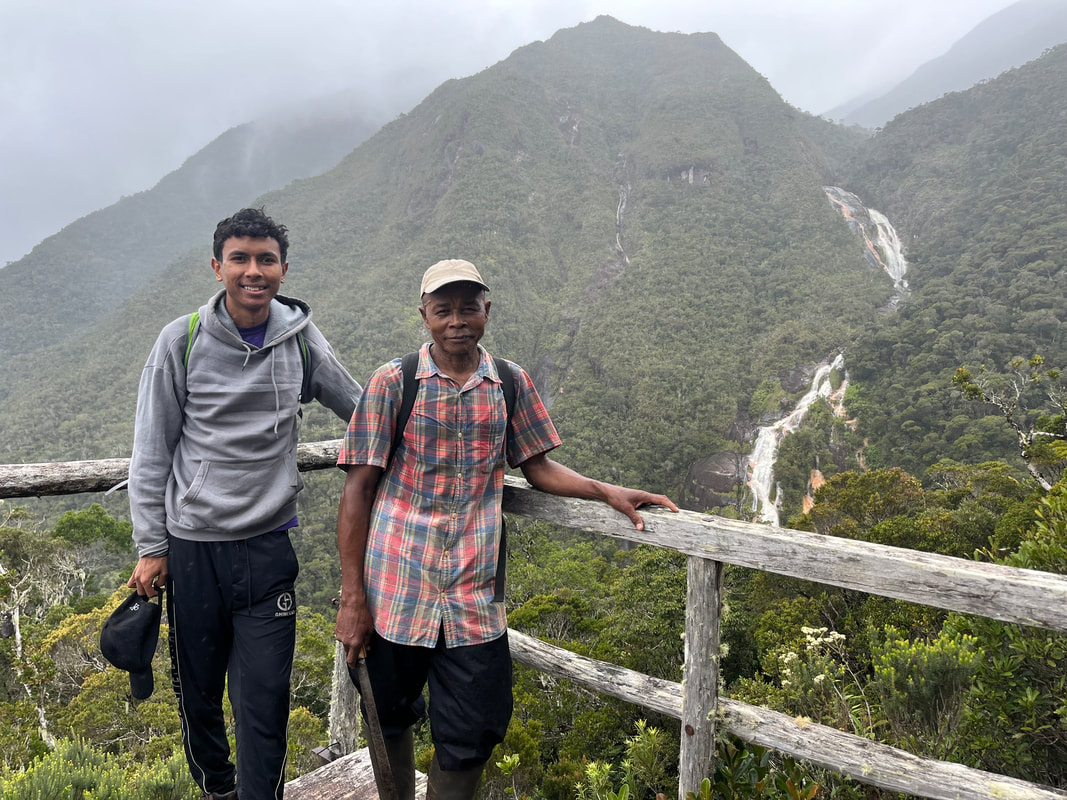
Fetra and local botanical expert Edouard pose with a waterfall on the hike to Marojejy’s summit (PC: Katherine Culbertson)
We began our wonderful way in Antananarivo (Tana), where I met my mentor and several other members of the Razafindratsima lab. These connections and planning meetings set a strong foundation to strengthen our knowledge, skills and experiences. Our fieldwork had two different parts, the first month was held at KAFS or Kianjavato Ahmason Field Station, Vatovavy region. The place was calm and peaceful. The friendly team we worked with made it more pleasant too. We had the chance to participate in one of their plantation events in a large gap surrounded by forest.
Picture
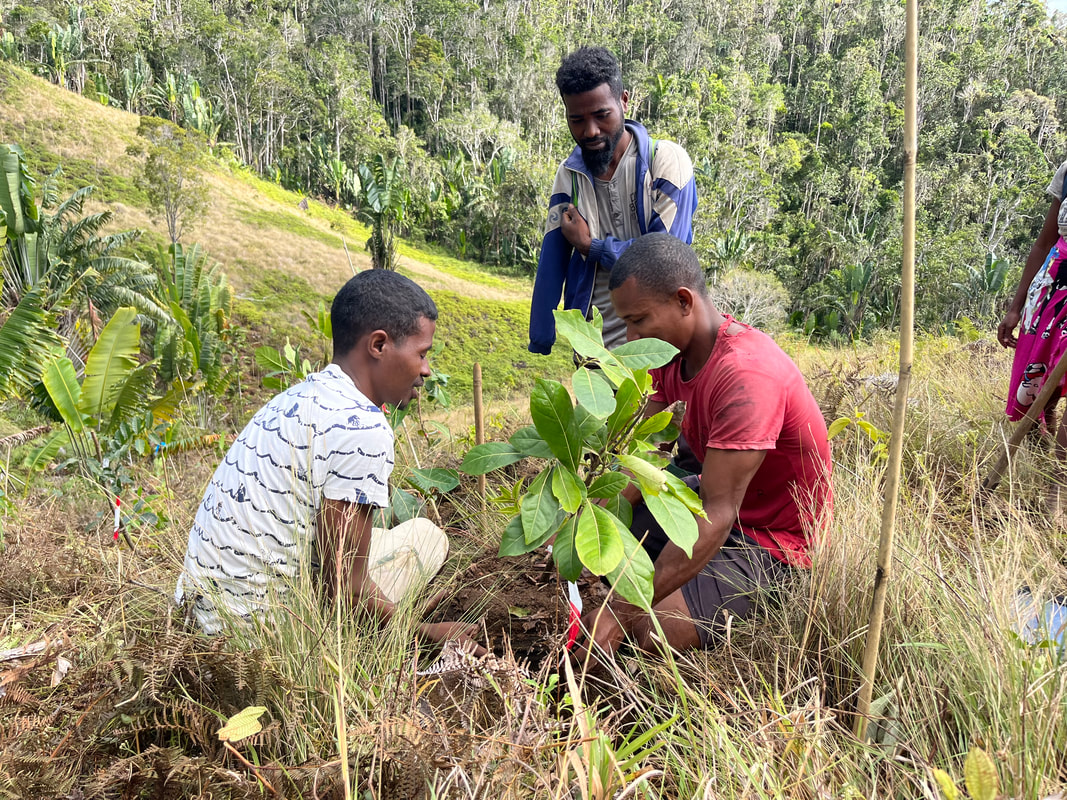
KAFS reforestation coordinator Romuald demonstrates how to plant a sapling at a restoration site near Tsitola forest (PC: Katherine Culbertson)
Picture
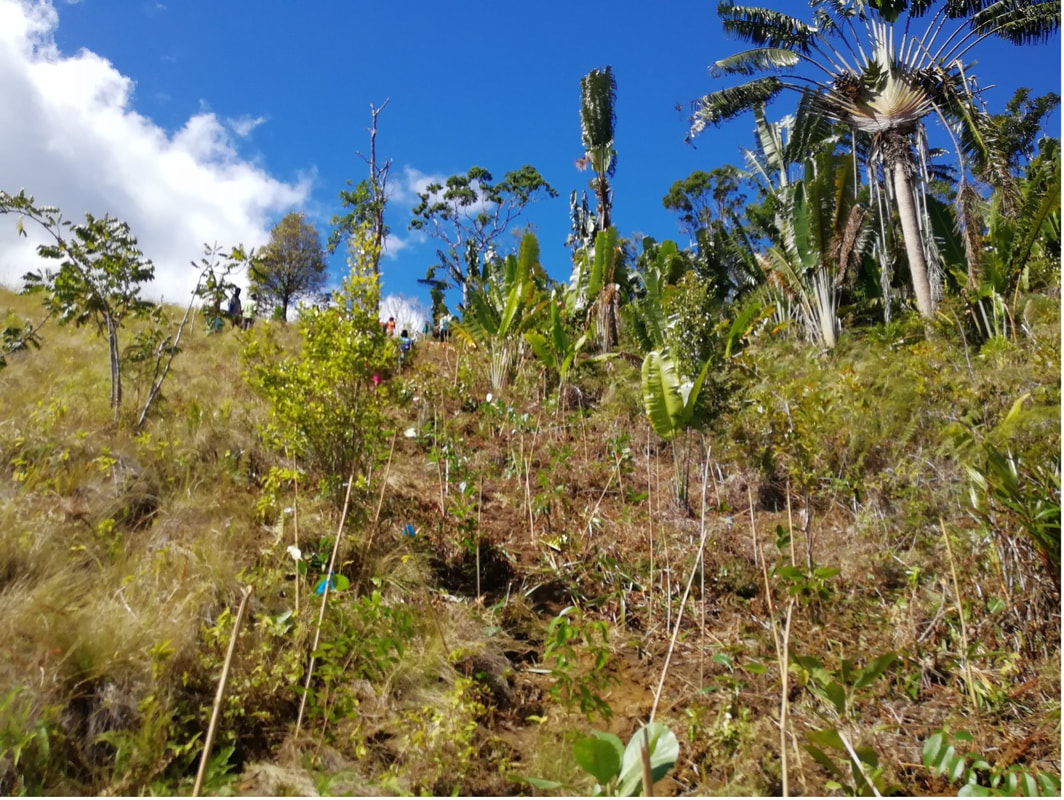
The day’s work is finished at the Tsitola restoration site
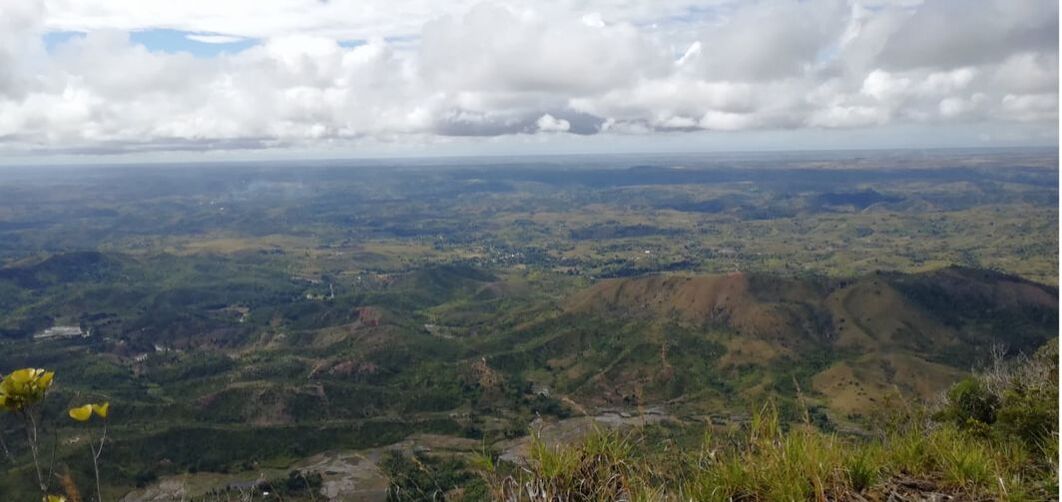
​The astonishing view from famous mountains such as Sangasanga and Vatolahy shows how the complex and interesting landscape might influence the vegetation, especially the view from the top of Vatovavy, the region’s namesake. That view was memorable. The 11th of August, we left Kianjavato, heading to Marojejy. 
Picture
Landscape views from the top of Vatovavy mountain (PC: Fetra Rakotomanga)
​We were sad to leave the great team at Kianjavato but Marojejy National Park still held a special gift for us. ​
Picture
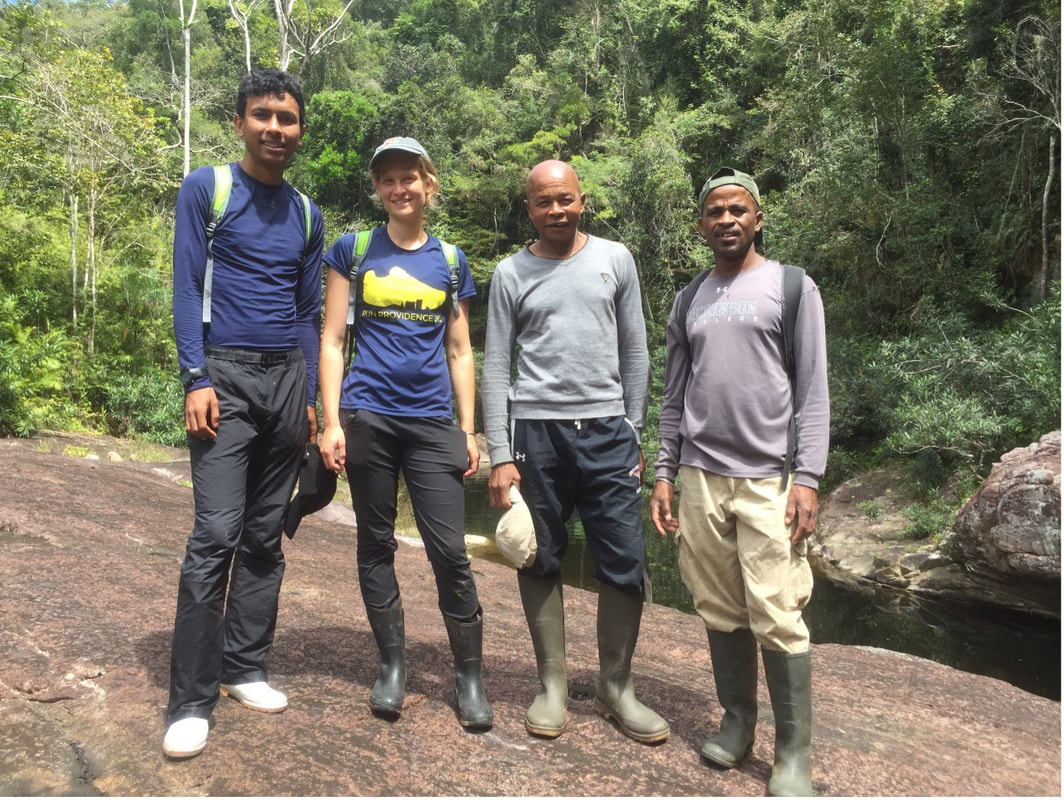
Part of our field team (Fetra, Kat, Edouard, and Dezy) pose for a photo in Marojejy National Park (PC: Frederic Ramahavita)
The place changed but the good vibes remained as we worked with our botanist and local guides. I would like to take the chance to thank all of them – Dezy, Edouard, Fred, Richard, and Rabesahala - who helped us gain more experiences and skills. For example, I learned to identify some species by their distinctive characteristics, like “rara” with red sap like blood (“rara” means blood in Malagasy) and many more. They use vernacular names and morphologic criteria to identify the tree species, which contributes important value to scientific study. ​
I enjoyed the contrast between two weeks inside the humid forest and two days in the city of Sambava. Staying in the forest felt like spending two weeks in paradise, as our guide Dezy always says, and then we came back to the civilization again for two days for supplies. Do not let me forget to say that the song of the stream and all the birds near every camp that we have been in gave us sweet dreams after hard work. I can say that I loved our fieldwork! Thanks also to our collaborators at Lemur Conservation Foundation (LCF) who gave us magnificent days near the ocean when we were out of the forest. 
​
​
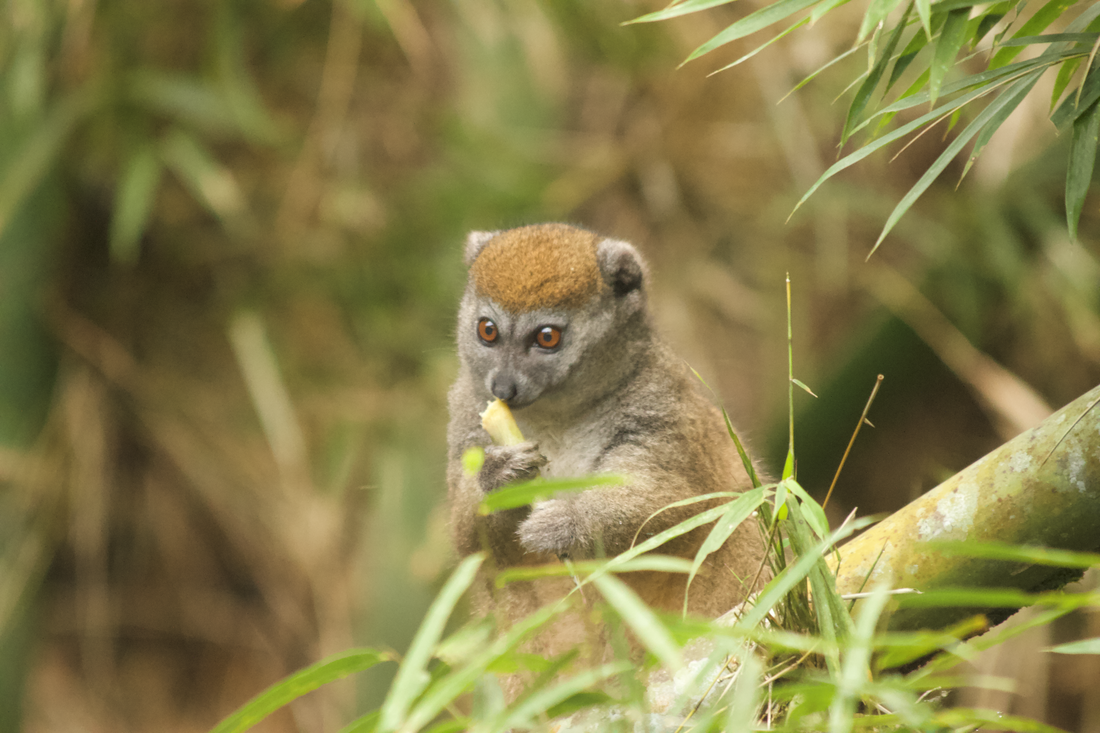
Having a guide that is specialized in mammals and amphibians increased considerably our chance to see many endemic frogs like Mantella sp., Boophis sp.; reptile like Brookesia, almost all iconic birds and amphibians that Marojejy is known for, and also the “bokimbolo”: Hapalemur occidentalis that we can see very near at Camp 1. (Photo 6)
Picture
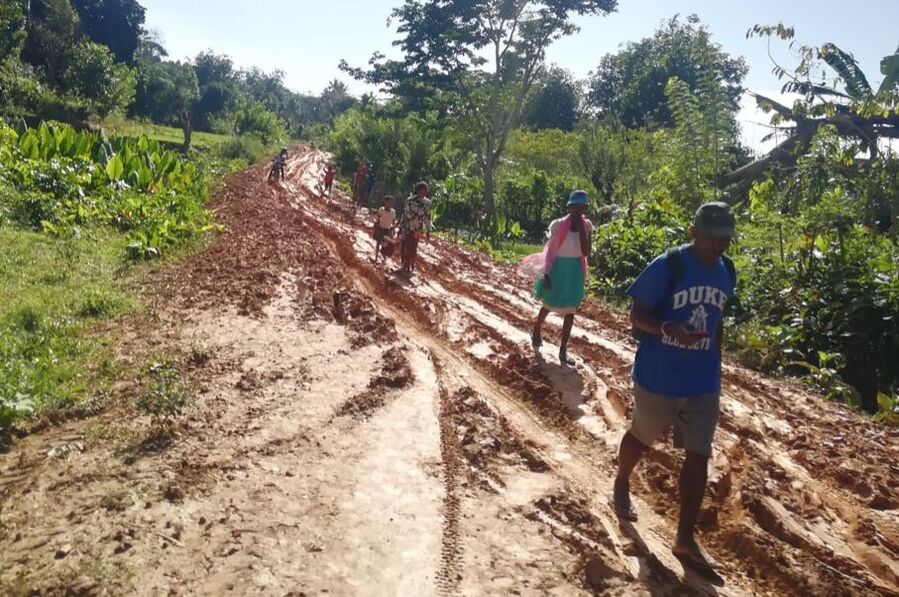
The road became impassable for vehicles on the way to one of our Marojejy field sites, Andongozambe, so we hiked an extra 5km on foot (PC: Fetra Rakotomanga)
Picture
A bokombolo (bamboo lemur, Hapalemur occidentalis) snacks on bamboo near Camp 1 in Marojejy (PC: Katherine Culbertson)
Before leaving the first site, we made the hike of 5.1 km and over 4,000ft in elevation to the “sommet” the two last days. On our way, we saw the Helmet Vanga : Euryceros prevostii. We spent a night in camp 3, a very cold and quiet camp it was. We did not feel very lucky arriving at the top with rain, but it was and will always be a part of the adventure and still we had a wonderful experience.

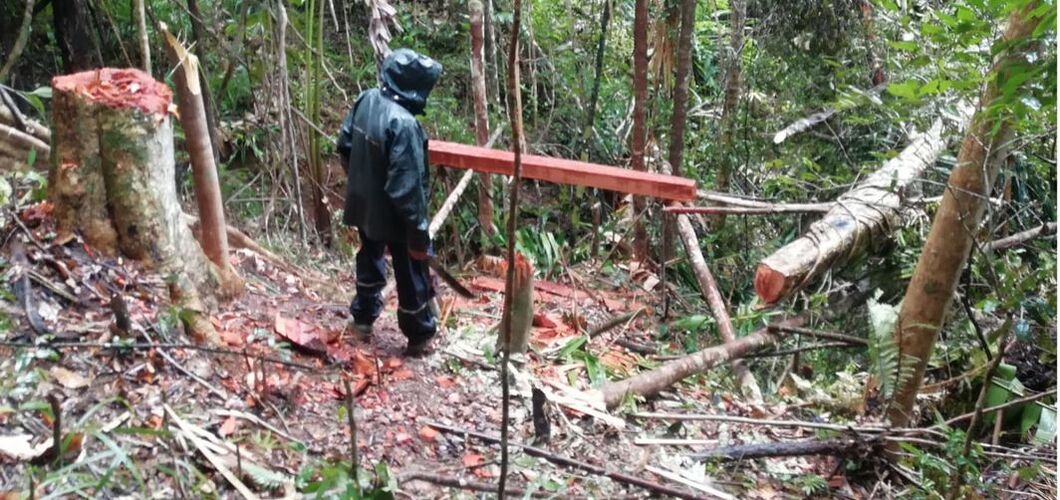
Sadly, during our fieldwork, we also witnessed many activities that threatened the ecosystem including forest clearance, wood harvesting and some lemur traps. These activities can have a huge impact on the biodiversity that the park shelters. Much work has been done before to try to prevent these illegal activities and conserve the forest, but there is still more to do, so we encourage you to stand with us for the sake of our nature. These ongoing threats to biodiversity show us up close how reforestation (the main research of my mentor) is important.
Picture
Unfortunately, illegal harvest of precious woods, like this tapika tree, is not uncommon within the park (PC: Fetra Rakotomanga)
To wrap up, I want to thank my mentor first for all of the knowledge and skills that she taught me during the fieldwork, and for continuing to mentor me on the development of my research now. The guidelines she gave have helped me build the first criteria of being a scientist as I advance through the first big steps of my career. Second, a big thanks to Dr Onja Razafindratsima and her lab for their hospitality. I was quiet and a little shy at the beginning when I first met the lab, but they never made me feel outside the box. They are very open to everyone and close to each other, so that it does not feel like a lab but a scientific family where you can grow as a seed in a healthy community.
Picture
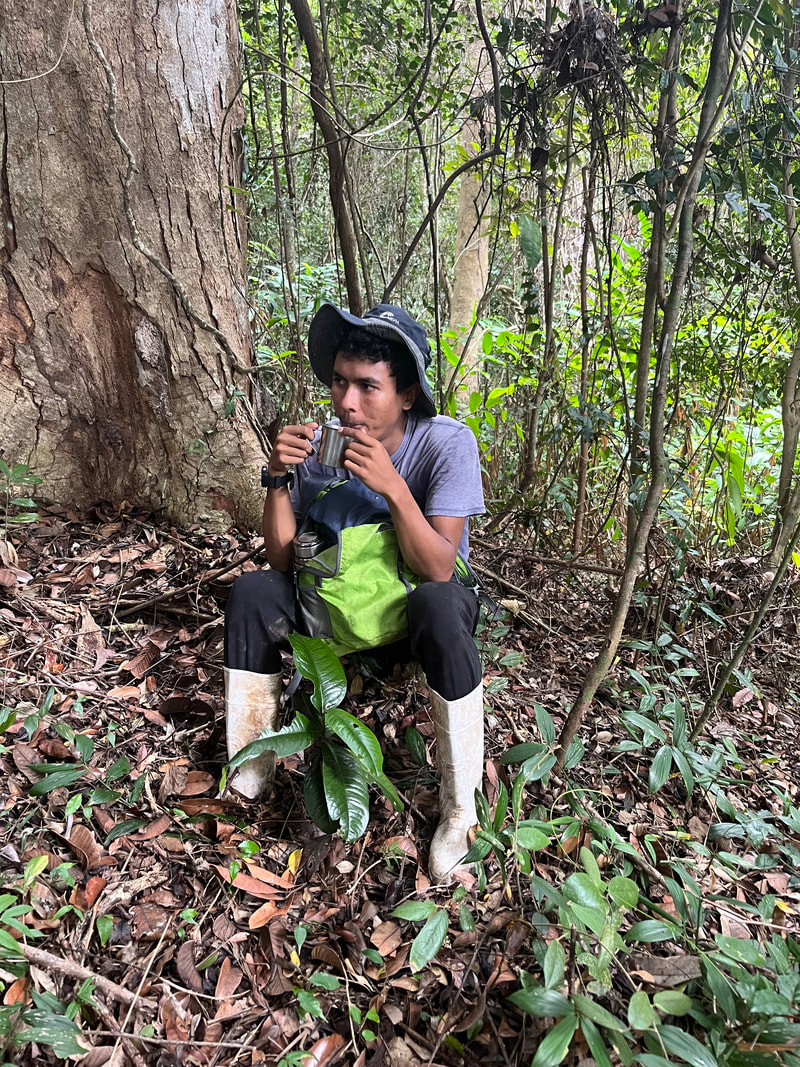
Fetra enjoys a cup of tea in the forest (PC: Katherine Culbertson)
There is always a starting point for everyone but do not let that make you feel that you are not good enough. There will always be people who have already gone through your stage willing to help you, so I just want to say: “take the chance, give your best and enjoy”.

Comments are closed.

    We're using this space to share updates on our adventures in the field.

    Archives

    December 2024
    May 2024
    March 2024
    November 2023
    October 2023
    August 2023
    September 2022
    May 2022
    April 2022
    July 2021
    June 2021
    March 2021
    February 2021

    Categories

    All
    Baobab
    Fieldwork
    FieldworkFail
    Ihofa
    Kianjavato
    Lemurs
    Madagascar
    Malagasy
    Marojejy
    Menabe
    Ranomafana
    Students

    RSS Feed

Proudly powered by Weebly
  • Home
  • Research
    • Research Overview
    • Frugivory, Movement and Seed Dispersal
    • Ecological changes
    • Conservation & Management
  • Publications
    • Opinion pieces & Editorial articles
    • Scientific Articles
    • Published data
  • People
    • PI Razafindratsima
    • Postdocs & Students >
      • @ Cal
      • Affiliates
    • Past lab members & visitors
    • Field teams
  • Field updates
  • Outreach
  • Join Us
    • Call for applications MS
  • Useful Links
    • Fellowship resources
    • Research in Madagascar
  • Group news
  • Adventures
  • Affiliates